


Motorcycle Tire Age – The comprehensive guide: When are motorcycle tires considered too old? What are the requirements regarding tire age? How can you tell if a motorcycle tire is aged? We answer all these questions and more in this detailed guide on motorcycle tire aging.
Table of Contents
How old can motorcycle tires be?
There are no laws or regulations in the most countries that mandate replacing motorcycle tires after a certain age. However, that doesn’t mean old tires aren’t a risk. Depending on environmental exposure and storage conditions, tires should be replaced after 10 years at the latest. Even with proper care and ideal storage, rubber becomes brittle or hard over time. The result is reduced performance and a significant safety hazard. So yes, tire age matters. It’s in your best interest to inspect your tires regularly and replace them before they become a problem. Everything you need to know about motorcycle tire aging is covered in this guide.
How to read motorcycle tire age
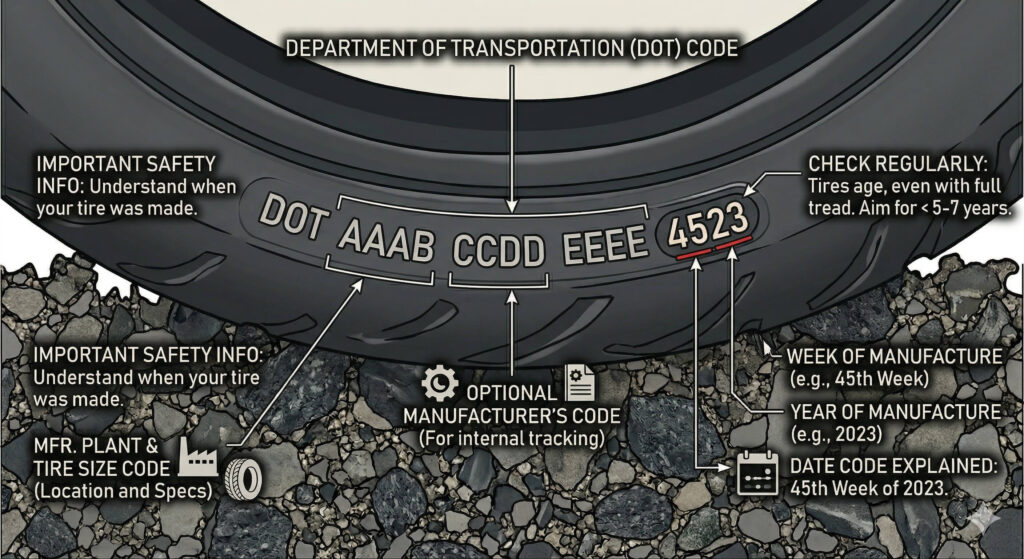
Anyone can easily check the age of a tire. Every tire has a DOT number (Department of Transportation), which includes the production date. The DOT code consists of four segments, each providing useful information. The most important part for everyday use is the last segment, which contains four digits in a box and indicates the production date.
Explanation of DOT segments:
- Plant code: The first two characters indicate the manufacturing plant (e.g., 9C = BRIDGESTONE/FIRESTONE ITALIA S.P.A.)
- Size code: The next two characters refer to the tire size
- Type code: An optional manufacturer-specific code that may indicate the brand if not already clear from the plant code
- Production date: The last three or four digits (usually in an oval) show the week and year of manufacture
Example: DOT 3721 = produced in calendar week 37 of the year 2021.
Why Motorcycle Tires Age and Lose Grip
Motorcycle tires, just like all rubber products, degrade over time. While tread wear is visible, the primary factor in aging is the breakdown of the tire’s polymer structure. Sunlight (UV radiation) is a major culprit, causing oxidation that makes the rubber stiff, brittle, and prone to cracking. Heat, whether from riding or environment, accelerates this process. Additionally, time alone allows ozone and other environmental contaminants to react with the rubber, causing it to lose its flexibility and grip, even if the tire is sitting in storage. Therefore, it’s recommended to replace tires within a certain time frame, often around five years, regardless of tread wear.
Checking motorcycle tires for signs of aging
Although the DOT number is a useful indicator, it doesn’t always reflect the actual condition of a tire. Many tires may not be “too old” by DOT standards but have still aged significantly due to environmental factors. Conversely, some tires stored under ideal conditions may be over 10 years old and still perform safely.
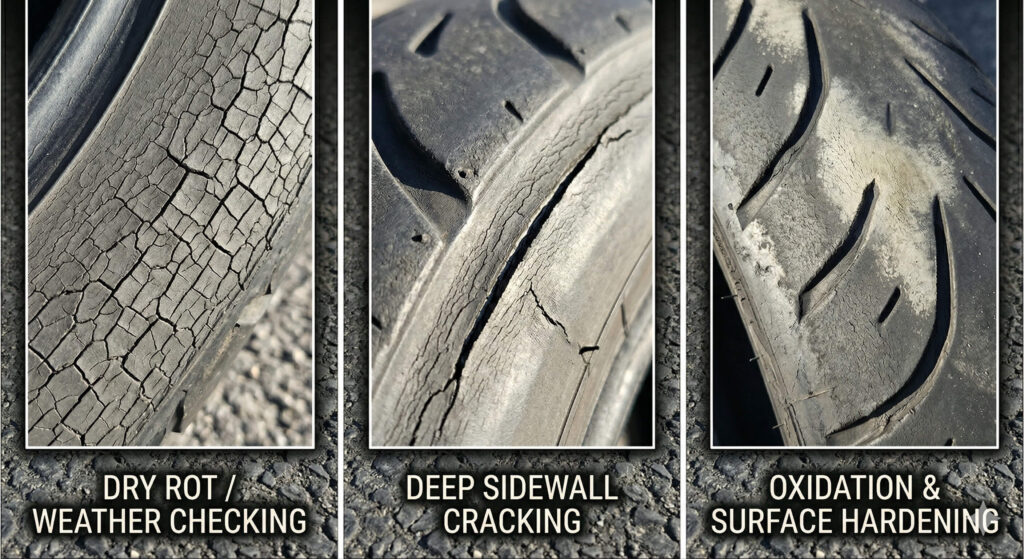
So relying solely on the DOT number isn’t recommended. A visual inspection is always necessary. Here are signs that a tire is old and potentially unsafe:
- Brittle rubber
- Hardened rubber
- Whitish discoloration
- Flaking
- Smooth surface
- Glossy surface
- Slippery handling
- Harsh or uneven ride
- Poor wet grip
- Weak feedback
- Reduced damping and comfort
We’ve included example photos of severely aged motorcycle tires.
What does “new tire” actually mean?
You’ll often see references to “factory-new” or simply “new” tires. It’s a subtle but important distinction.
- “Factory-new” refers to tires less than three years old.
- “New” refers to tires less than five years old.
According to the German Tire Retail and Vulcanization Trade Association (BRV): “If stored properly, a tire is considered factory-new up to 3 years old and new up to 5 years old. Unused tires under 5 years old that have been stored correctly are technically safe to buy and mount. However, their usable lifespan is limited.” The association recommends replacing tires after 10 years.
By the way: All tires in our online shop are less than 36 months old and therefore factory-new (usually even younger than 12–24 months). Clearance items and older models are always clearly marked. For motorcycle riders, the limited lifespan of a 5-year-old tire is rarely an issue, since tires typically wear out within a single season or a few thousand kilometers.
Maximum recommended age for motorcycle tires
Our recommendation when buying motorcycle tires: Choose tires no older than 36 months from the current model line. If you’re okay with previous models or want to save money, you can safely use tires up to 60 months old – provided they’ve been stored properly.
The aging process usually begins once the tire is mounted. Tires should be replaced after 5–7 years of use on the motorcycle, even though the BRV allows up to 10 years.
Motorcycle tire age rule of thumb:
- With proper storage, “new” tires up to 5 years old are perfectly safe to use
- Tire aging primarily occurs once mounted on the bike
- Tires should not remain on the motorcycle for more than 10 years; in many cases, 5–7 years is already critical
- Tip: Motorcycle tires older than 3 years are often sold at discounted prices and offer good savings potential
Real-world experience with old motorcycle tires
In one of our field tests, we examined a Pirelli Diablo Rosso II that had been mounted for 13 years. Visually, the rear tire showed significant aging—hardened sidewalls and brittle surface material. During the test ride, the tire delivered vague handling and extremely poor grip in wet conditions. On dry country roads, grip was generally acceptable, though the bike was far from its performance limits.
Interestingly, only the right sidewall of the rear tire showed extreme aging – likely due to sun exposure from leaning on the side stand. The left sidewall and tread were in noticeably better condition. The front tire, with the same DOT and mounting time, showed no visible aging and performed much better in the test.
Can you ride with tires this old? Yes, you can. But grip and feedback suffer under aged conditions. It’s also possible for one side of the tire to age faster, leading to uneven grip. Based on our own experience, we strongly advise against long-term use of aged tires. Tire age is simply too important to ignore.
Have you had experiences with old motorcycle tires? Leave us a comment—we’d love to hear your story!
