

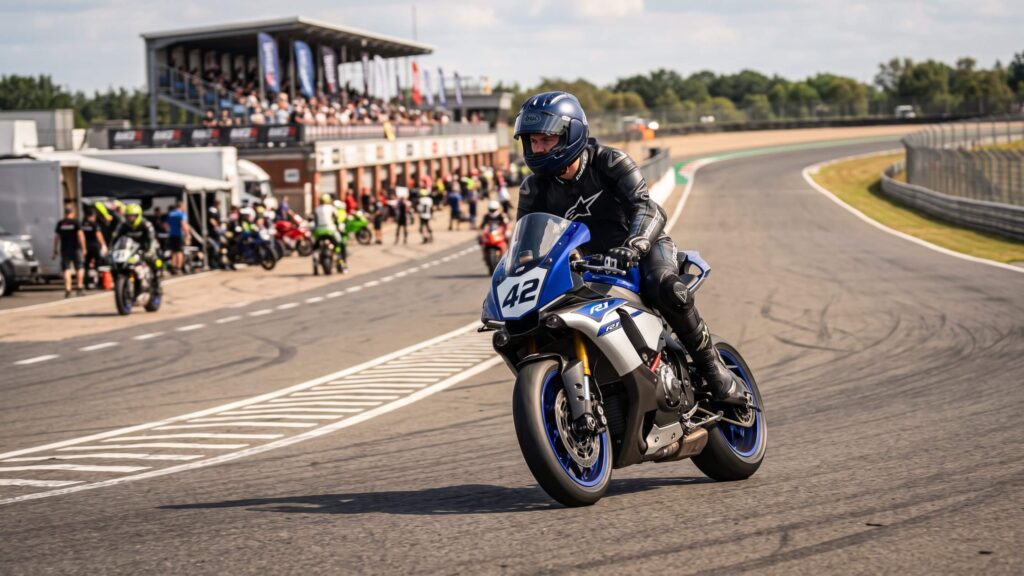
At trackdays you increasingly see riders heading out without tire warmers – whether for practical reasons like riding to the track, because they use semi‑slicks, or because the Metzeler Racetec TD Slick can be ridden cold in a pinch. But without warmers, one rule applies: the first minutes decide grip, safety, and tire life. This article explains how to warm up your tires correctly, which mistakes to avoid, and why weaving left‑right is not only pointless but dangerous.
Table of Contents
Tip: You can find affordable semi‑slicks and race tires in our shop…
🏁 Why warming up is important
Tires only work properly within a specific temperature window. Semi‑slicks and selected trackday slicks like the Racetec TD Slick need less temperature than full race slicks, but they still only deliver full grip once:
- the rubber compound is activated
- the carcass has built up temperature
- the sidewalls are elastic
- the air pressure has stabilized (pressure rises with temperature)
Without tire warmers, it usually takes 1–2 laps until a semi‑slick reaches around 50–70 °C. A Racetec TD Slick requires a bit more care, but can also be warmed up reliably.
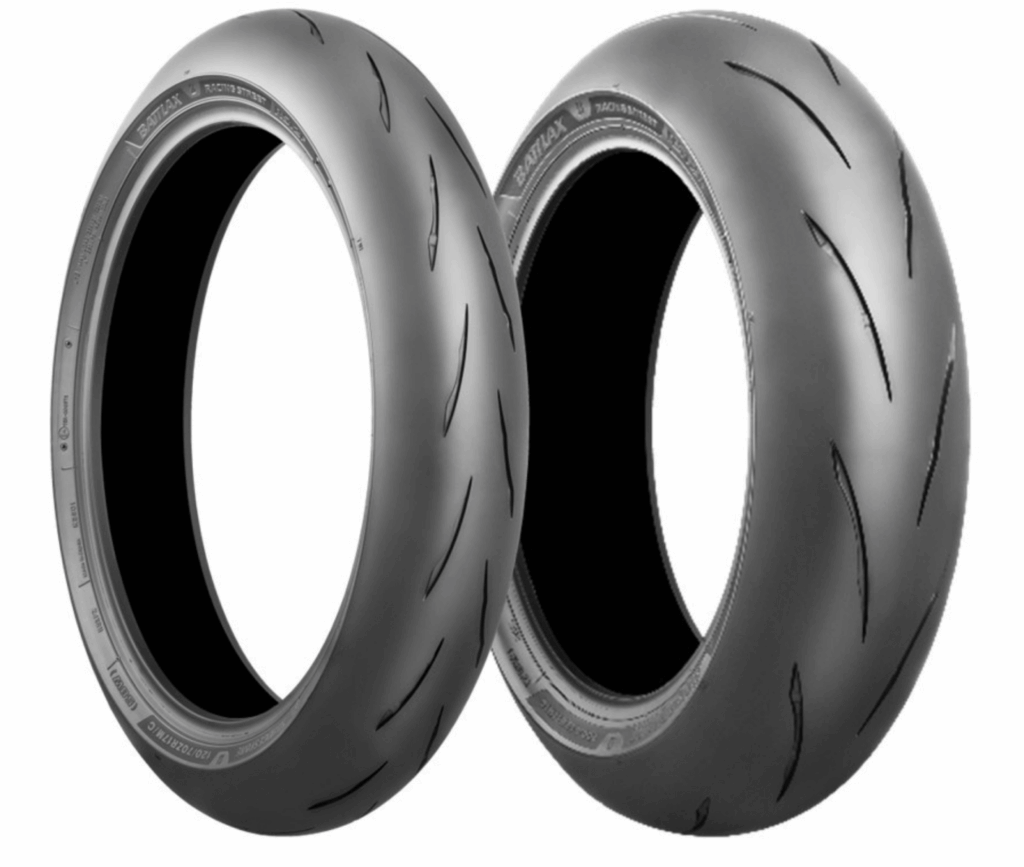
🔥 The correct warm‑up technique
1. Strong, clean braking – the most important factor
The front tire gains temperature partly through braking: Hard deceleration heats the brake disc and rim, and that heat travels into the carcass and eventually into the rubber. Of course, braking itself also demands work from the rubber, which generates additional heat.
How to do it right:
- Perform several strong braking maneuvers on the first lap
- Not abruptly, but controlled and progressive
- Brake earlier and harder before corners, but don’t overdo it – then roll into the radius
- Keep the bike stable, avoid unnecessary lean angles
The front tire warms up much faster this way than through any other method.
2. Smooth acceleration – but no full throttle
The rear tire builds temperature through drive forces. The key is a smooth, clean pull on the throttle, not abrupt twisting.
Correct:
- Accelerate out of corners gently but decisively
- Open the throttle linearly
- No wheelies, no abrupt load changes
Incorrect:
- Jerky throttle
- Full throttle on cold tires
- Hard lean angles on a cold sidewall
3. Keep your body position calm
Unsteady body movements cause load changes that overwhelm cold tires.
- Keep your upper body calm
- Knees stable
- No hectic weight shifts
- Eyes far ahead
⚠️ Common mistakes when warming up
❌ Weaving / zig‑zag riding
Many believe weaving left and right warms the tires faster. This is a myth – and especially dangerous on a racetrack.
Why it doesn’t work:
- Lateral load is far too low
- The carcass barely warms up
- The rubber compound stays cold
- It endangers other riders
On trackdays, weaving is an absolute no‑go.
❌ Leaning too early
Cold tires have very little side grip. The first 1–2 laps should be ridden with moderate lean angles.
❌ Too low tire pressure
Semi‑slicks and TD slicks need the correct cold pressure to build temperature during warm‑up. Too low pressure leads to:
- vague, unstable feeling
- excessive carcass flex
- uneven wear
❌ Braking into the corner
Trail braking does build temperature, but during warm‑up it should be used very cautiously. Braking into the corner can quickly overwhelm the grip of a cold tire.
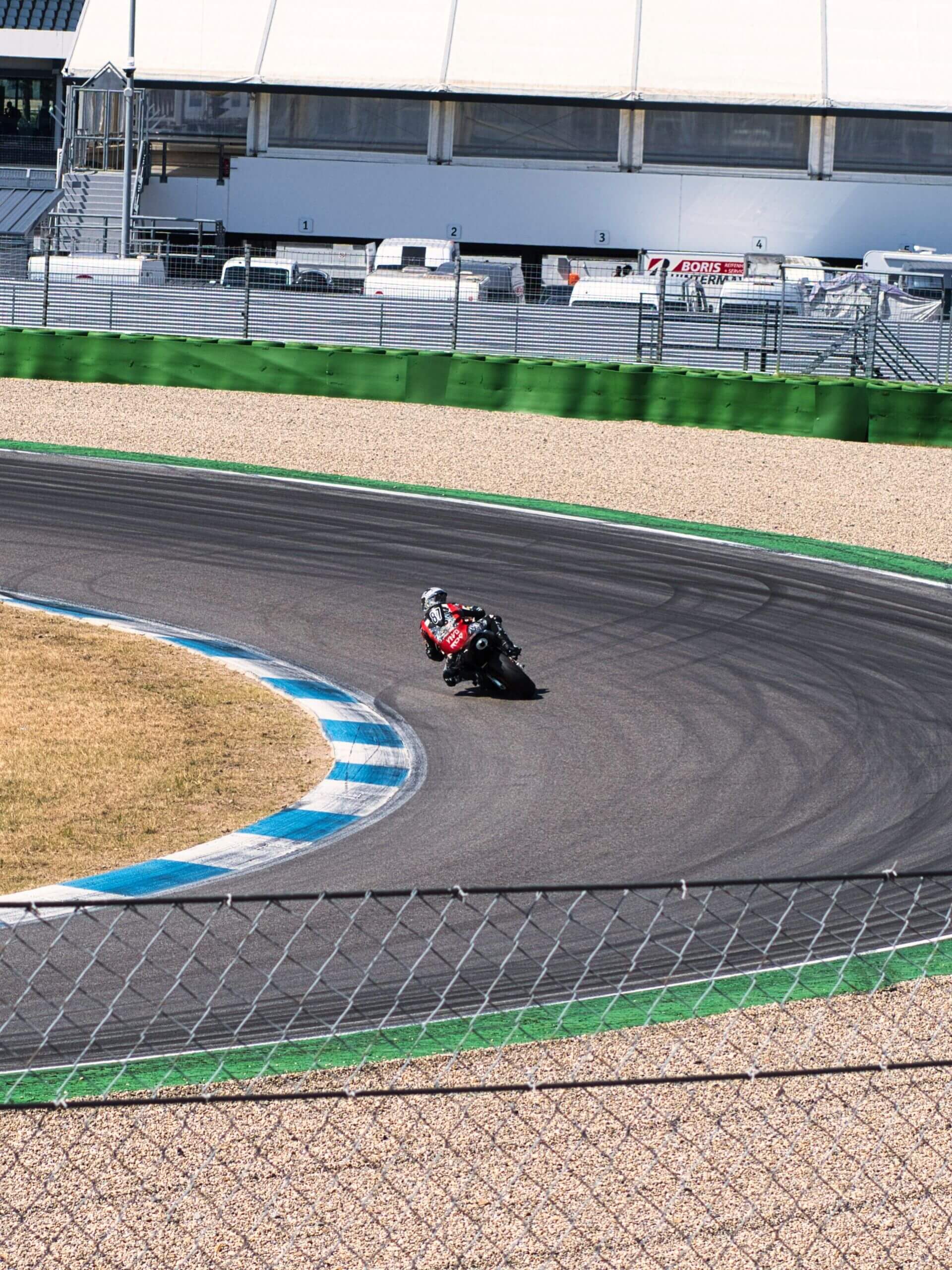
🏍️ Special characteristics of different tire types
Semi‑slicks (e.g., hypersport trackday tires)
- Easy to warm up
- Need less temperature than full slicks
- Work well even in moderate ambient temperatures
- Ideal for hobby trackdays
Recommended tires: Bridgestone Battlax RS12, Pirelli Diablo Supercorsa SP V Series
Metzeler Racetec TD Slick
- Developed specifically for trackdays
- Can be ridden without tire warmers
- Requires more caution in the first corners
- Warms up reliably through braking + acceleration
- Very consistent performance over multiple sessions
More information about the TD Slick here…
🧭 Warm‑up routine: The perfect first lap
A small guide on how to warm up your motorcycle tires quickly and reliably during a trackday.
Warm‑up phase – Lap 1
Building temperature
Sector 1
- Strong braking for front‑tire heat
- Smooth line, no quick lean changes
Sector 2
- Gentle acceleration for rear‑tire heat
- Clean throttle, no abrupt load changes
Sector 3
- Moderate lean angle
- Calm body position, stable vision
Warm‑up phase – Lap 2
Stabilizing grip
Sector 1
- Brake slightly later, possibly light trail braking
- Tires begin to work
Sector 2
- Stronger acceleration possible
- Rear tire builds final temperature
Sector 3
- Normal lean angle possible
- Tires in the temperature window
🎯 Conclusion: Warming up is simple – if you do it right
Anyone starting without tire warmers must take the first minutes seriously. With controlled braking, smooth acceleration, and calm riding, you’ll reach the optimal temperature window quickly and safely – whether on semi‑slicks or the Metzeler Racetec TD Slick.
Key rules:
- Braking warms the front
- Acceleration warms the rear
- No weaving
- No abrupt load changes
- 1–2 laps of patience
This way you ride safely, quickly, and with minimal wear – and get the maximum performance from your tires.
Tip: If you want to skip the warm‑up process entirely, use tire warmers. A set starts at around $200 and delivers full performance from the first corner. You’ll find a wide selection of entry‑level and professional warmers here…
Do you have any questions or tips about warming up your tyres on racetrack without tyre warmers? Leave a comment below!
AI generated title image.
