

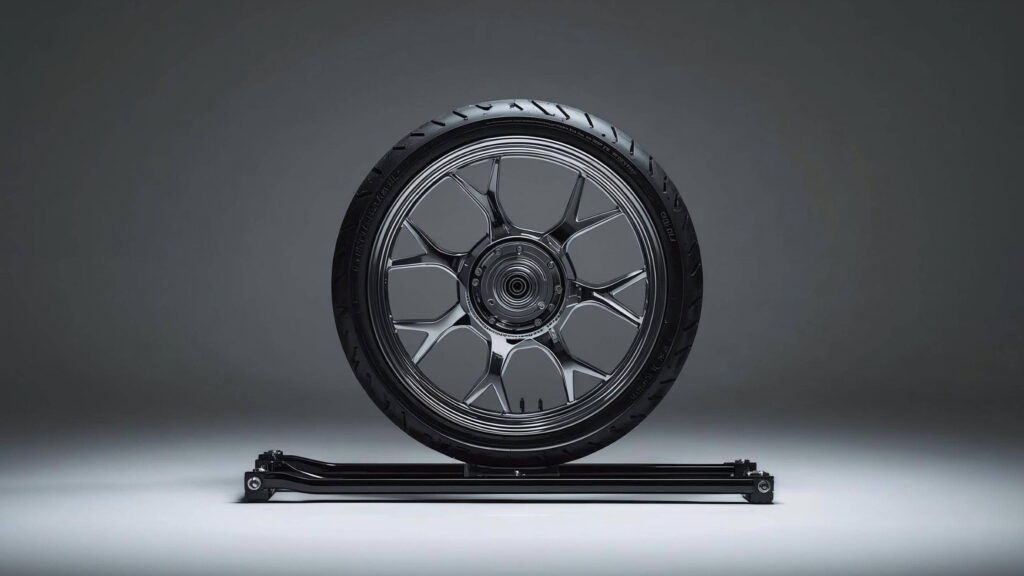
Balancing motorcycle tires yourself – The ultimate guide: In this guide, we’ll walk you through step by step how to balance your motorcycle wheels on your own. While people often say “balancing the tires,” what you’re actually balancing is the wheel with the tire mounted. It doesn’t take much to do it yourself, and you don’t need to be a professional mechanic either. A detailed tutorial how to balance motorcycle tires is included in this article.
Table of Contents
When does it make sense to balance motorcycle wheels yourself?
If you have your motorcycle tires balanced at a shop, you’ll pay between €20 and €35. That might not sound like much, but over time it adds up, especially for frequent riders. Doing it yourself is a great alternative to a trip to the workshop, and it’s also a fun way to get hands-on with your bike’s mechanics.
- If you ride a lot and want to save money
- If you mount tires yourself (e.g. after buying online)
- For track days and similar events
Balancing stand and accessories
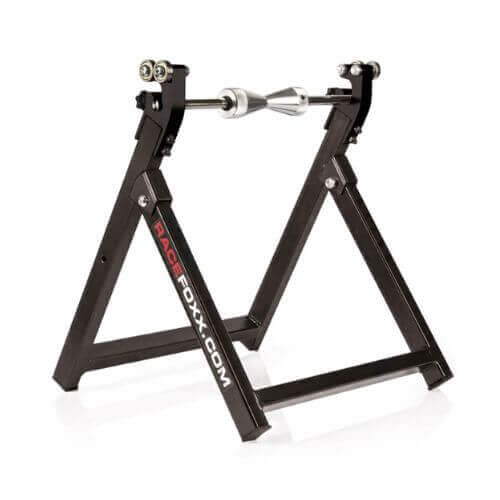
To balance motorcycle wheels, you don’t need much. The most important piece of equipment is a balancing stand for motorcycle tires. This lets you suspend the wheel and balance it by attaching weights. In addition to the stand, you’ll need balancing weights and a few other items, which we’ve listed here:
- Balancing stand
- Adhesive weights
- Plastic scraper to remove old weights
- Brake cleaner (to clean the surface before applying new weights)
Step-by-step guide to balancing motorcycle tires yourself
Below is our detailed step-by-step guide for balancing motorcycle rims after a tire change. Note: we only use adhesive weights, as they’re easy to handle and work on all types of rims. Let’s get started:
- Remove the old weights from your rim – any leftover adhesive can be cleaned off with WD-40 or brake cleaner.
- Clean the rim bed with brake cleaner to ensure the new weights stick properly.
- Slide the balancing shaft through the wheel and secure it using the cone mounts.
- Place the wheel on the balancing stand.
- The wheel will swing slightly until the heaviest point settles at the bottom. You’ll need to attach weights to the opposite side (top).
- Determining the correct weight takes a bit of experience. If you rotate the wheel a quarter turn and it quickly swings back to its original position, you need more weight. If it moves slowly, less weight is needed.
- A good starting point is 10 grams of weight.
- Spin the wheel again and check for movement. Add more weight if necessary.
- The wheel is considered fully balanced when it no longer swings. Rotate it in quarter turns all the way around and check each position to ensure the swinging has stopped.
Note: Minor swinging movements under 3 grams are normal and can be ignored. If balancing isn’t possible at all, rotating the tire on the rim may help.
Background knowledge & technical insights on motorcycle tire balancing
Balancing methods: There are two ways to balance wheels – static and dynamic.
The static method, also known as “free swinging,” balances the wheel without measuring dynamic imbalance. This technique is still used in MotoGP and other racing series today and is perfectly adequate for motorcycles. Because front wheels are narrow, it’s difficult to reliably measure dynamic imbalance. The slim design of the rim also makes it hard to place weights in a way that corrects dynamic imbalance. Unlike cars, the rear wheel rim on motorcycles is rigidly fixed in the swingarm, making it less sensitive to dynamic imbalance.
Maximum balancing weight: When balancing motorcycle tires, the following limits should not be exceeded:
- Front wheel: less than 40 grams
- Rear wheel: less than 60 grams
Matching: If you can’t stay within these limits, you’ll need to rotate the tire on the rim to a different position—this is called “matching.” If balancing still isn’t satisfactory after that, you should consider filing a warranty claim with the manufacturer due to imbalance or check your wheel.
Handlebar wobble with new tires: If you experience handlebar wobble after mounting new tires, the wheel may need to be rebalanced. If the wobble persists even after rebalancing, the tire may be defective and should be returned to the manufacturer.
Conclusion: balancing motorcycle tires yourself
As you can see, balancing motorcycle wheels yourself is far from rocket science. With a bit of practice, the process becomes routine and quick. It’s especially worthwhile on track days to balance your slick tires yourself. That way, when switching between slicks and street tires, you can balance your wheels quickly, affordably, and easily – ensuring optimal handling.
Still have questions about balancing motorcycle or scooter wheels? Leave us a comment below, we’re happy to help!
